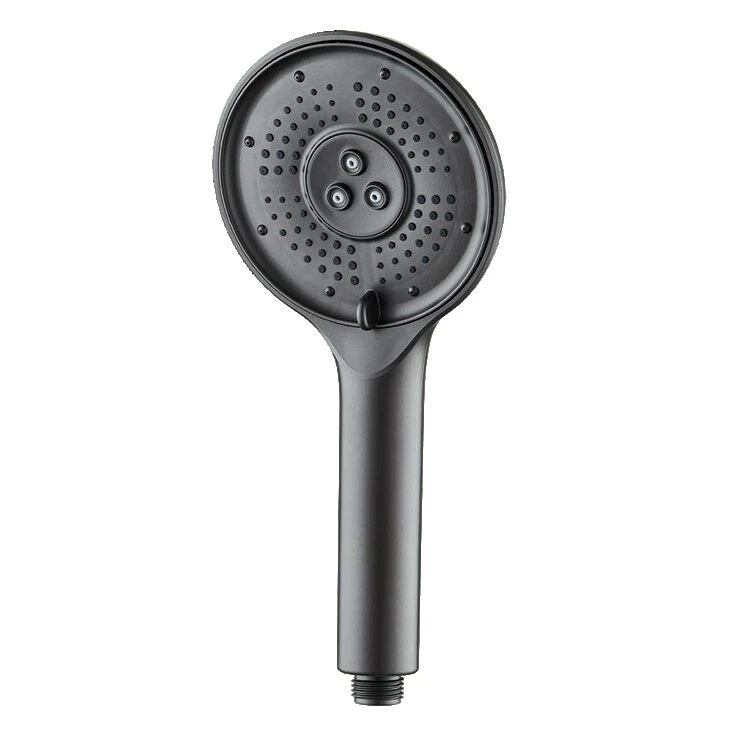
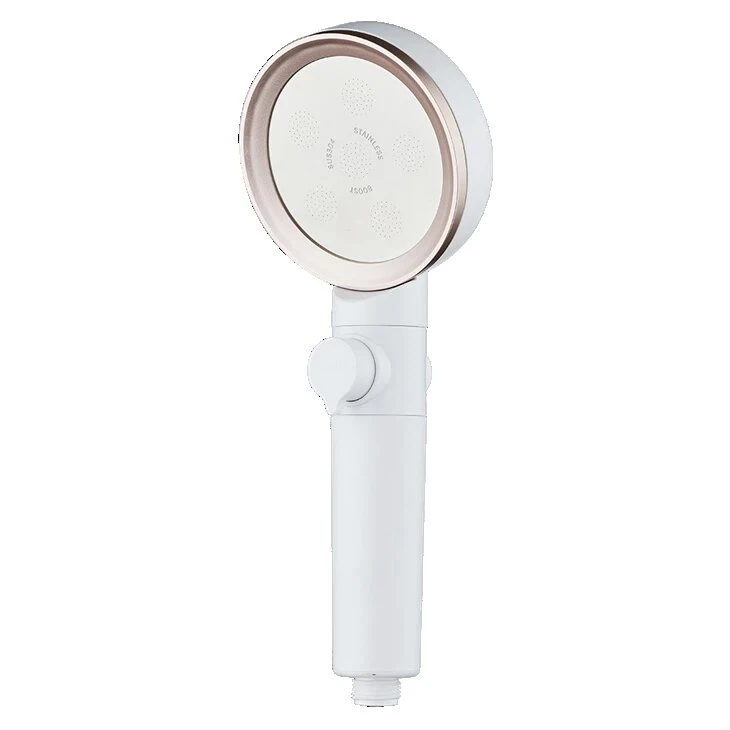
As competition in the hand shower market becomes increasingly fierce, consumers are no longer satisfied with "multiple water modes" or "water-saving functions", but have higher requirements for the comfort of the shower experience. As a professional manufacturer, LILING will optimize the water performance of the shower through fluid mechanics design, so as to stand out from the competition.
1. Why does fluid mechanics design determine shower comfort?
Traditional shower heads often only focus on "water pressure" or "number of water outlets", but in fact, factors such as water flow shape, impact force distribution, and water droplet size are the key factors affecting comfort. For example:
● Too fast water flow → strong skin tingling, poor experience;
● Too scattered water flow → insufficient flushing force, weak cleaning effect;
● Too large/small water droplets → affect coverage area and body temperature.
Through fluid mechanics simulation (CFD) optimization design, the water flow can be accurately controlled to achieve the optimal state of "soft but not scattered, dense but not piercing".
2. Analysis of key fluid mechanics technologies
(1) Water outlet matrix design: not just "quantity", but also "arrangement"
Ordinary shower heads: simple and uniform distribution, random collision of water flow, resulting in uneven pressure.
Optimization solution:
● Gradient arrangement: inner circle small holes (high-pressure fine water mist) + outer circle large holes (stable water flow) to achieve layered shower;
● Asymmetric layout: simulate the natural rainfall angle to reduce the tingling sensation of water flow directly impacting the skin.
(2) Turbulence control technology: How to make the water flow softer?
Turbulence (chaotic water flow) can cause splashing and unstable pressure. Solutions include:
● Guide design: Add a spiral guide structure inside the shower to make the water flow rotate and output stably;
● Honeycomb flow stabilizer: Decompose large water flow through multi-layer filters to reduce pressure fluctuations.
(3) Air injection technology (AIR MIX): Make water droplets fuller
● Principle: Mix air into the water when it is discharged to form a "water droplet wrapped in bubbles" structure, which feels softer and saves more than 30% of water.
3. How to verify the fluid mechanics performance of the shower?
(1) CFD (computational fluid dynamics) simulation test
● Simulate the water flow trajectory through 3D modeling, optimize the outlet angle and internal structure, and reduce the cost of physical prototype testing.
(2) Actual test indicators
● Water pressure-flow curve: ensure stable water flow under different water pressures;
● Water droplet size analysis (laser particle size analyzer): the ideal range is 0.5-1.2mm (too fine like mist, too thick like a needle);
● Skin touch evaluation: invite testers to blind test and compare the comfort scores of different designs.
4. Future trends: intelligent water flow regulation and personalized shower
With the advancement of technology, the fluid mechanics design of handheld showers will develop in the direction of dynamic adjustment, for example:
● Pressure adaptive shower: automatically adjust the water flow mode according to the water pressure;
● AI+ sensor: real-time monitoring of user habits, adjusting the water flow intensity and temperature.
Is your shower optimized by fluid mechanics? Welcome to contact us for professional testing and improvement solutions!